
Updated: September 15, 2026
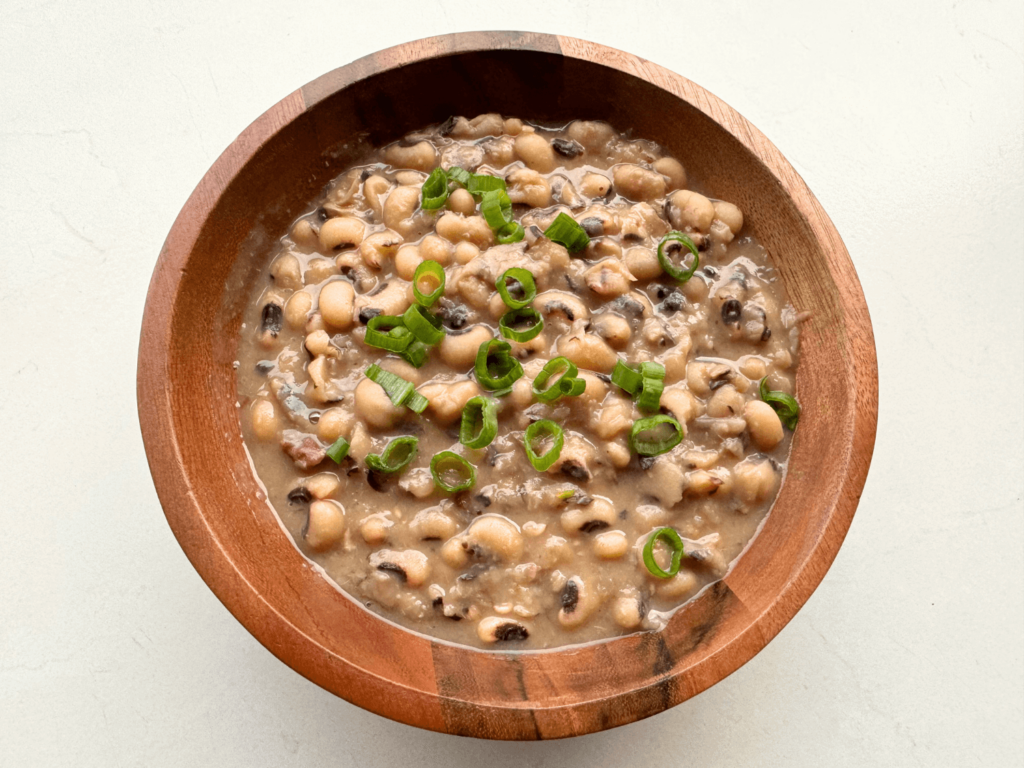
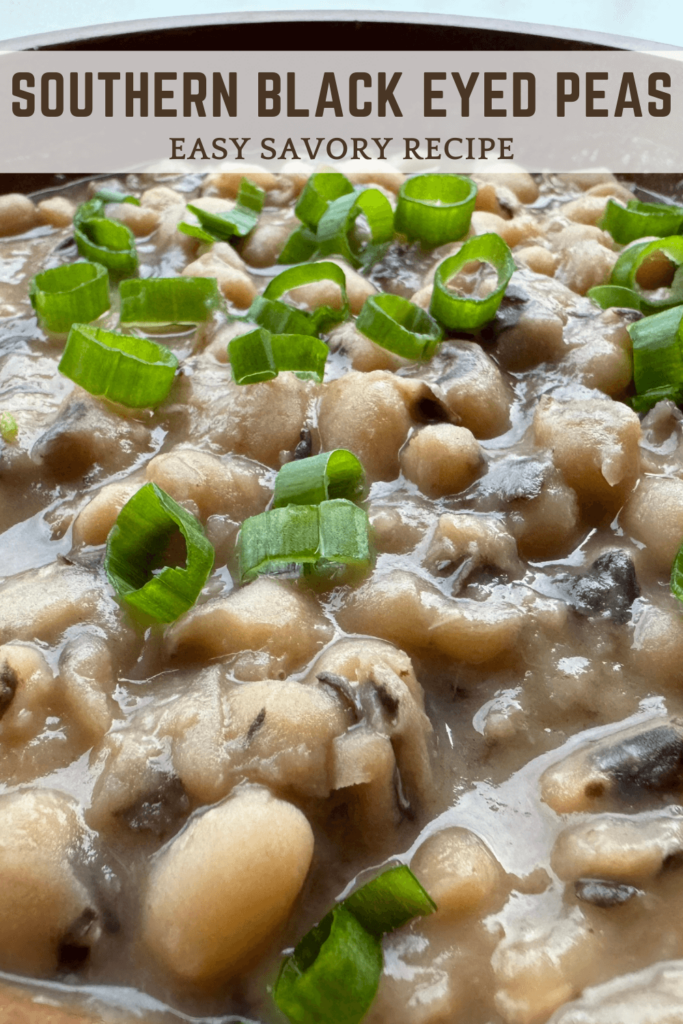
Black-eyed peas are more than just a comforting Southern dish, they’re a hometown favorite, deeply rooted in African American and Southern traditions. I fondly remember cleaning and sorting black-eyed peas with my grandmother as a child growing up, and they were one of my favorite dishes to enjoy! These Southern style peas are savory, hearty, and slightly creamy texture. They serve as a staple in many households in the South. Continue reading as I share with you how our family would sort, clean and prepare our black-eyed peas.
Want to Email This for Later?
Table of Contents
- The Origin and Cultural Significance of Black-Eyed Peas
- Ingredients for Southern Black-Eyed Peas
- How to Make Southern Black Eyed Peas
- Tips for Preparing Southern Black-Eyed Peas
- How to Serve This Recipe for Black Eyed Peas
- How to Store Southern Black Eyed Peas
- Preorder Your Ingredients from Walmart to Make this Dish!
- FAQ
- Black Eyed Peas Recipe
The Origin and Cultural Significance of Black-Eyed Peas
Like my family, black-eyed peas trace their origins to West Africa, where they were a dietary staple long before they arrived in the Americas. Enslaved Africans brought these nutrient-rich legumes with them during the transatlantic slave trade, which is how they became introduced to so many southern states in the US. Over time, these legumes became a popular dish enjoyed by many southerners.
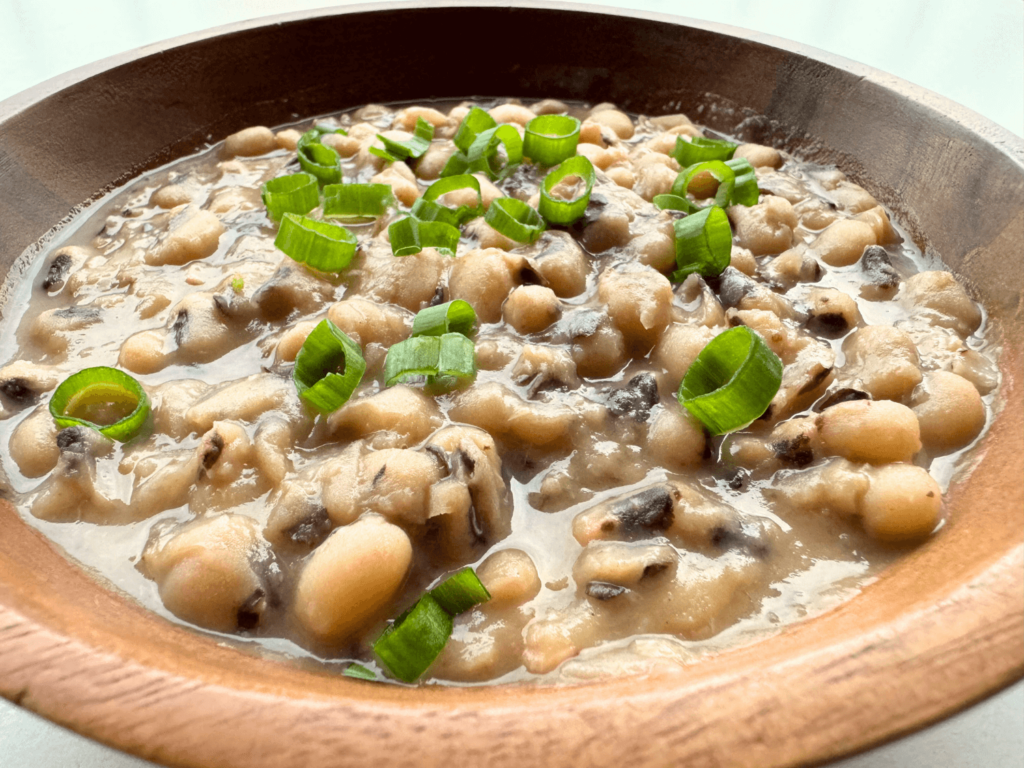
Black-eyed peas are not only a soul food staple in black households, but they were also a practical ingredient for survival. Over time, African Americans adapted their traditional recipes to the ingredients available on Southern plantations. They used what they had such as salt pork, greens, and onions to enhance the flavor of these beans. This southern tradition has continued down to our day resulting in the delicious slow-cooked black-eyed peas that we enjoy today.
Ingredients for Southern Black-Eyed Peas
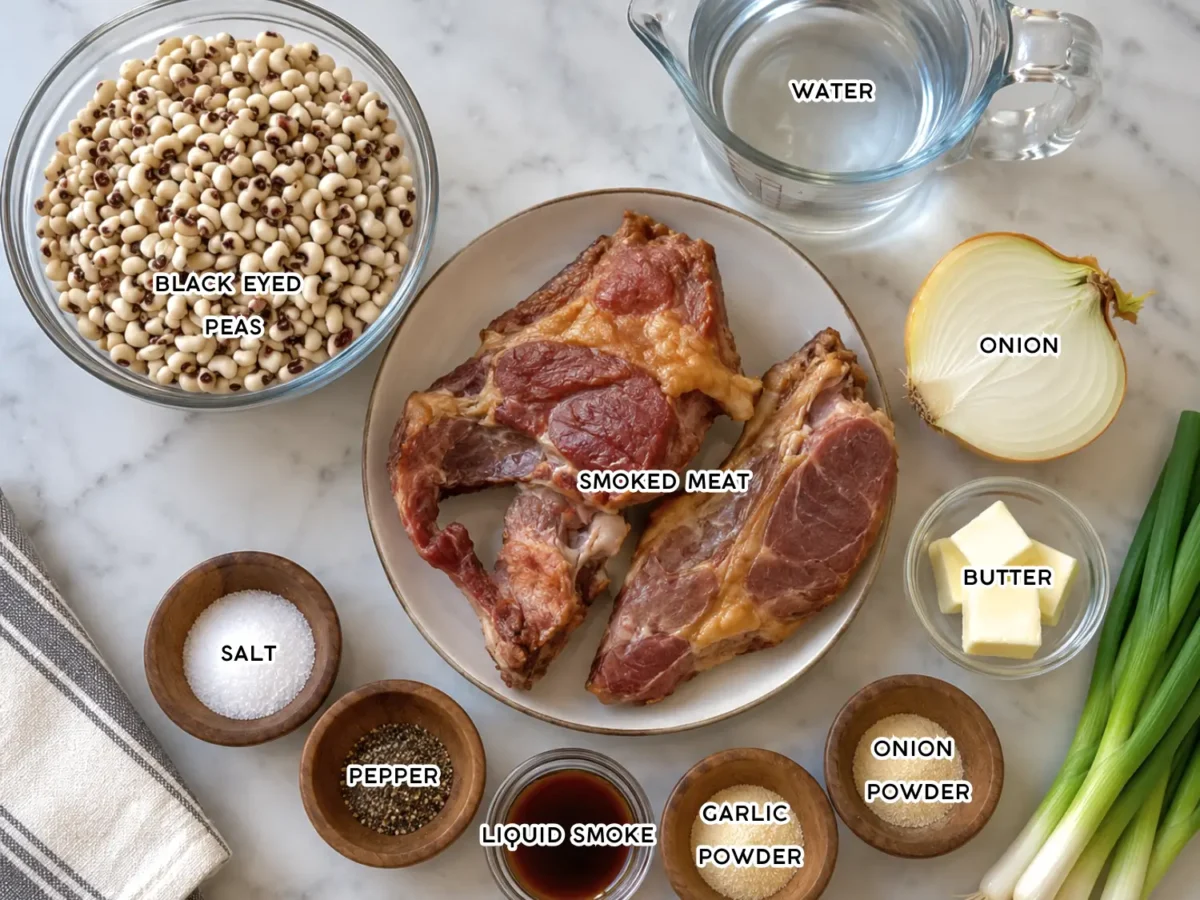
One thing I love about this Southern black-eyed peas recipe is that it doesn’t require a long list of ingredients. Below you will find a list of ingredients. Detailed measurements can be found in the recipe card below:
- Black-Eyed Peas – The star of the recipe! Black-eyed peas have a mild, earthy flavor and create their own gravy as they slowly cook. You can use fresh or dried peas; just remember that dried peas should be soaked first.
- Ham Hocks – Smoked ham hocks add a rich, savory, smoky flavor to the peas while also creating the flavorful broth they cook in. You can substitute smoked neck bones or smoked turkey if preferred.
- Onion – Adds a subtle sweetness and savory depth that complements the smoky meat and earthy peas.
- Butter – Adds richness while helping soften the onions and bring out their natural sweetness before they’re added to the peas.
- Onion Powder – Adds another layer of savory onion flavor directly to the broth.
- Garlic Powder – Provides a mild garlic flavor that rounds out the other savory seasonings without overpowering the peas.
- Liquid Hickory Smoke – Intensifies the slow-cooked, smoky flavor of the ham hocks. You only need a few dashes since a little goes a long way.
- Water – Creates the base for the homemade broth. As the ham hocks slowly simmer, they season the water with their smoky, savory flavor, so there’s no need to use store-bought broth.
- Salt & Black Pepper – Enhance and balance all the flavors in the pot. Add salt gradually since the smoked ham hocks will already contribute some saltiness.
- Green Onions – Optional, but they add a fresh, slightly sharp onion flavor and a little color to the finished dish.
How to Make Southern Black Eyed Peas
Below you will find step-by-step instructions and photos. Detailed instructions can be found in the printable recipe card below.
STEP 1: Prepare the black-eyed peas – If using dried black-eyed peas, sort through them to remove any damaged peas or debris. Rinse well, then soak them in water for about 8 hours or overnight. Drain and rinse again before cooking. If you’re using fresh black-eyed peas, simply sort and rinse them, no soaking is necessary.
STEP 2: Make the smoky broth – Place the ham hocks in a large pot or Dutch oven and add enough water to barely cover them. Add the onion powder and garlic powder, then bring the water to a gentle simmer over medium heat. Simmer for about 30 minutes to allow the ham hocks to begin flavoring the broth. Avoid letting it come to a rapid boil.
STEP 3: Sauté the onion – While the ham hocks are simmering, melt the butter in a small skillet over medium heat. Add the finely chopped onion and sauté until softened and fragrant.
STEP 4: Add the peas – Add the prepared black-eyed peas and sautéed onion along with the butter from the skillet to the pot. Stir in a few dashes of liquid hickory smoke.
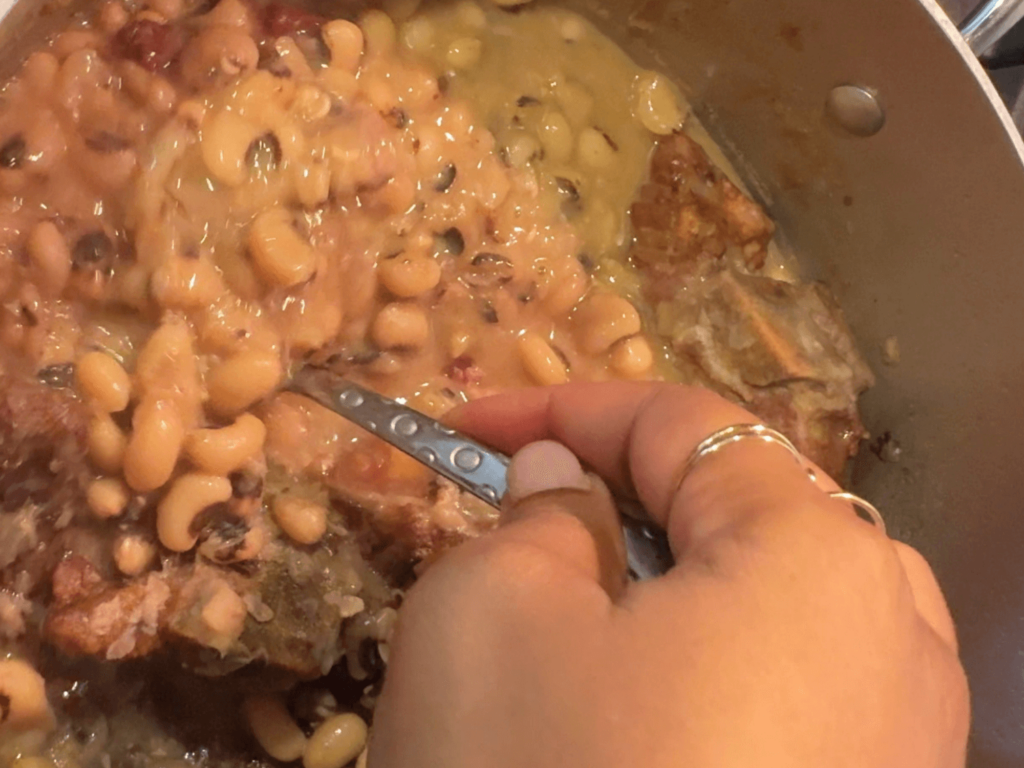
STEP 5: Cook low and slow – Cover the pot and reduce the heat to low-medium, keeping the peas at a gentle simmer. Cook for about 2 to 3 hours, stirring occasionally. As the peas cook, they will become tender and release starches that naturally help thicken the broth.
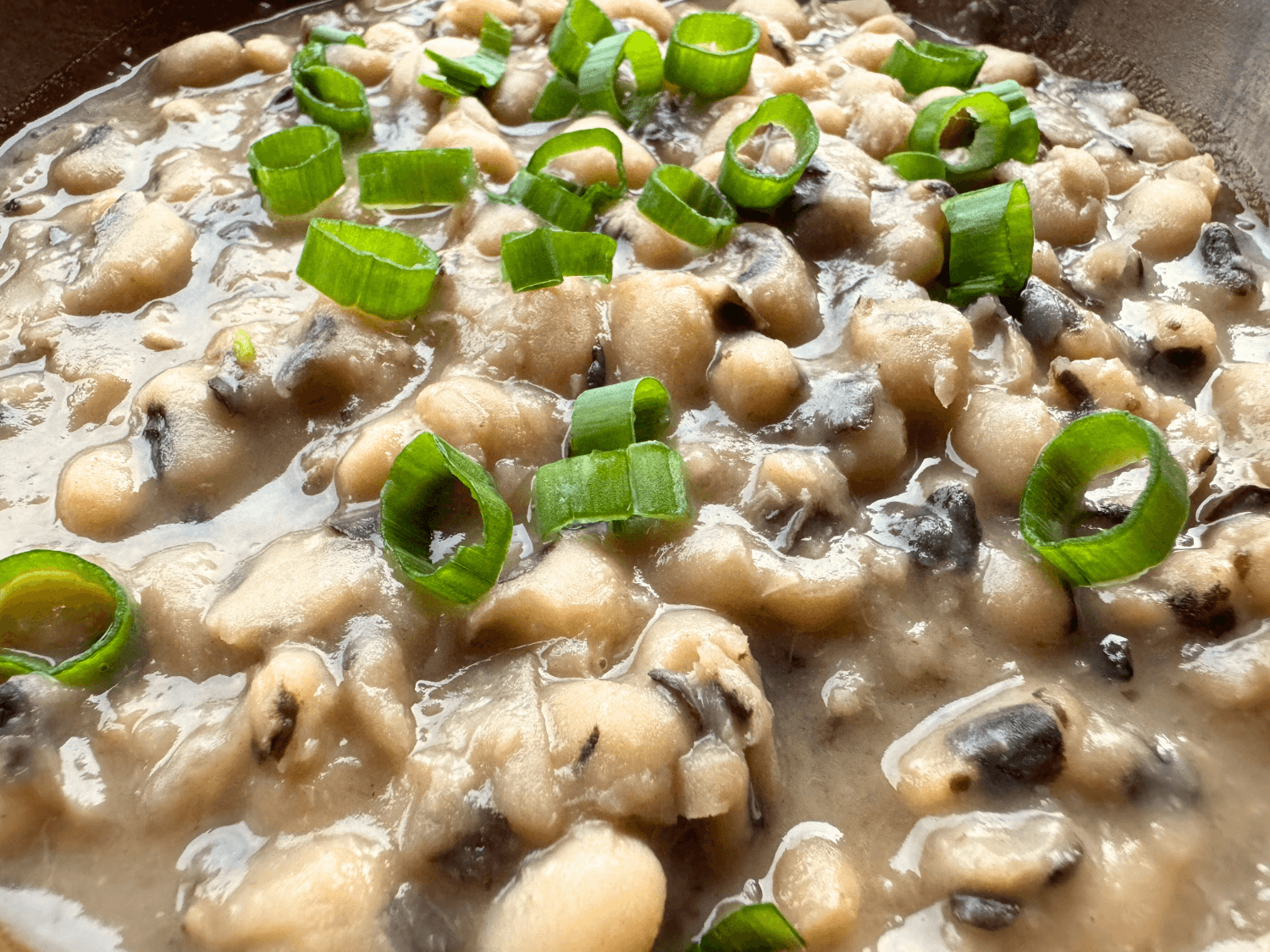
STEP 6: Season and serve – Taste the peas about halfway through cooking before adding salt since the ham hocks will already season the broth. Continue cooking until the peas are tender and the broth has a creamy, gravy-like consistency. Season with additional salt and black pepper to taste. Enjoy!
How Long Should Black-Eyed Peas Be Cooked?
For this recipe, I cook my black-eyed peas Southern-style and that’s low and slow. These peas simmer for about 2 to 3 hours after adding them to the smoky ham hock broth. The exact cooking time can vary depending on whether you’re using fresh or dried peas and how old your dried peas are. Rather than relying only on the clock, check the texture of the peas as they cook. They’re ready when they’re tender and creamy but still hold their shape. The cooking liquid should also have thickened into a rich, gravy-like broth.
Why Soak Black-Eyed Peas Before Cooking?
If you’re using dried black-eyed peas, I recommend soaking them for about 8 hours or overnight before cooking. Soaking rehydrates the dried peas, which helps them cook more evenly and can shorten their cooking time. It also gives you another opportunity to rinse away any remaining dirt or debris after sorting them.
To soak black-eyed peas, place the sorted and rinsed peas in a large bowl and cover them generously with cold water. The peas will expand as they rehydrate, so make sure there is plenty of water in the bowl. After soaking, drain and rinse them before adding them to your cooking pot. NOTE: Fresh black-eyed peas do not need to be soaked.
Tips for Preparing Southern Black-Eyed Peas
- Don’t skip making the broth first – Give the ham hocks about 30 minutes to simmer before adding the peas. This creates a smoky, savory cooking liquid that flavors the peas from the beginning.
- Keep the peas at a gentle simmer – Avoid rapidly boiling black-eyed peas. Cooking them low and slow helps them become tender and creamy without breaking apart too quickly.
- Don’t add too much salt at the beginning – Smoked ham hocks can be quite salty, and that salt will make its way into the broth as they cook. I like to taste the peas about halfway through cooking before deciding how much additional salt they need.
- Keep an eye on the liquid – The peas should have enough liquid to continue simmering without drying out. If the liquid gets too low before they’re tender, add a little more water as needed.
- Give them time to thicken naturally – There’s no need to add flour or another thickener. As the black-eyed peas slowly cook, some will soften and release their starches into the broth, creating that creamy, gravy-like consistency I love.
- Taste before serving – Once the peas are tender, taste the broth and adjust the salt and black pepper. If you want a little more smokiness, you can also add another small dash of liquid hickory smoke.
How to Serve This Recipe for Black Eyed Peas
I love serving these Southern black-eyed peas as a hearty side dish alongside some of my family’s favorite comfort foods:
- Lipton Onion Soup Mix Meatloaf
- White Rice
- Southern Style Green Beans
- Cornbread Muffins with Honey
- Turkey Wings
How to Store Southern Black Eyed Peas
If you have any leftovers, be sure to keep the peas with some of their flavorful cooking liquid when storing them. This helps keep them moist and flavorful when reheated.
- Refrigerator: Allow the black-eyed peas to cool, then transfer them and their cooking liquid to an airtight container. Refrigerate for 3 to 4 days.
- Freezer: Transfer cooled peas and some of their broth to a freezer-safe container or bag, leaving a little room at the top for expansion. Freeze for up to 3 months.
- Thawing: For best results, transfer frozen black-eyed peas to the refrigerator and allow them to thaw overnight before reheating.
- Reheating: Warm the peas gently in a saucepan over medium-low heat, stirring occasionally. If the broth has become too thick, add a splash of water until it reaches your desired consistency.
Preorder Your Ingredients from Walmart to Make this Dish!
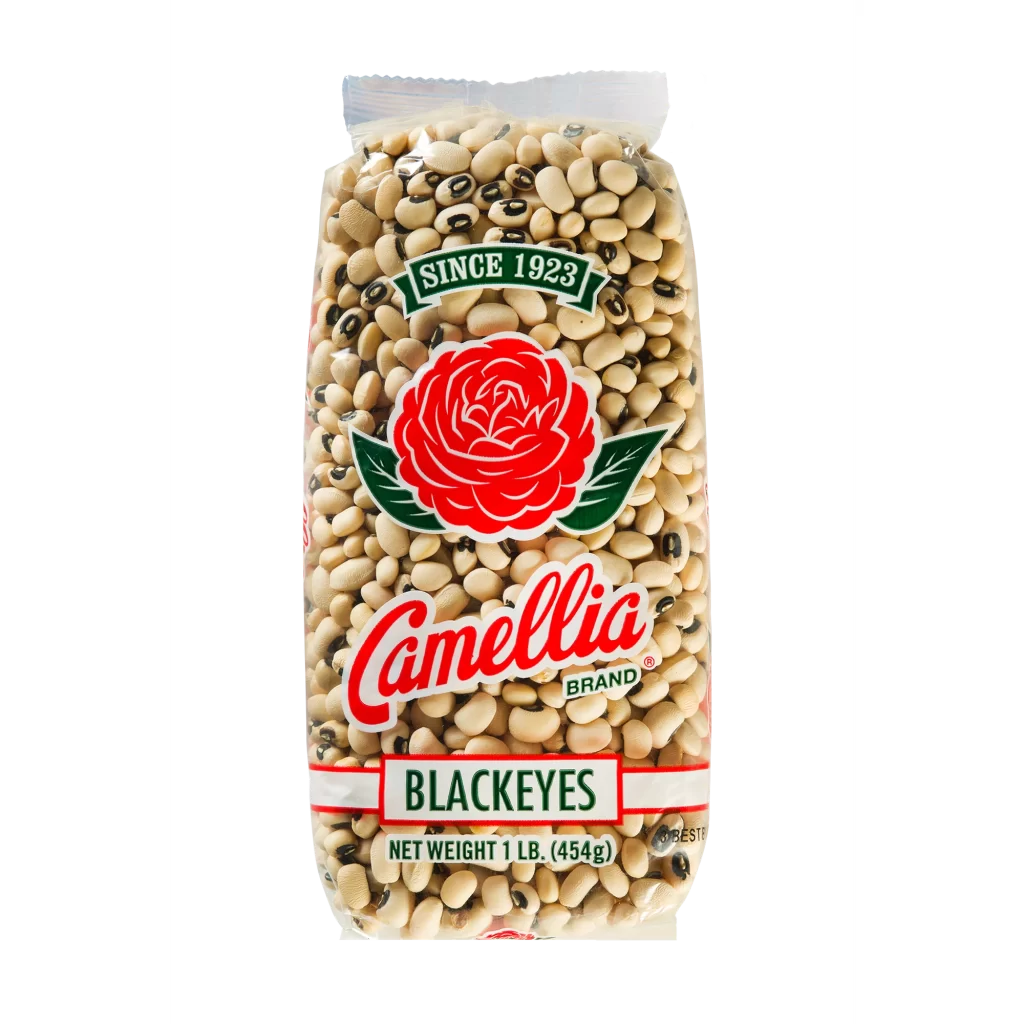
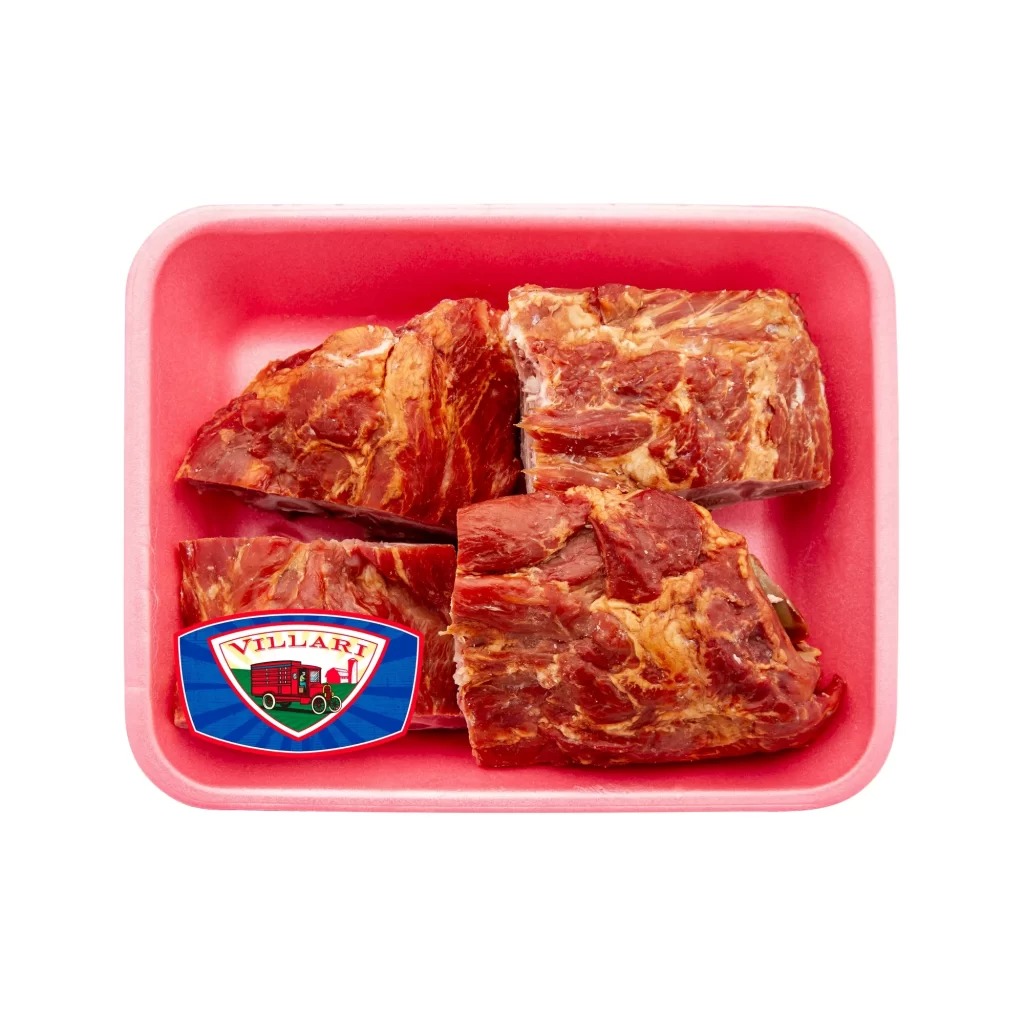
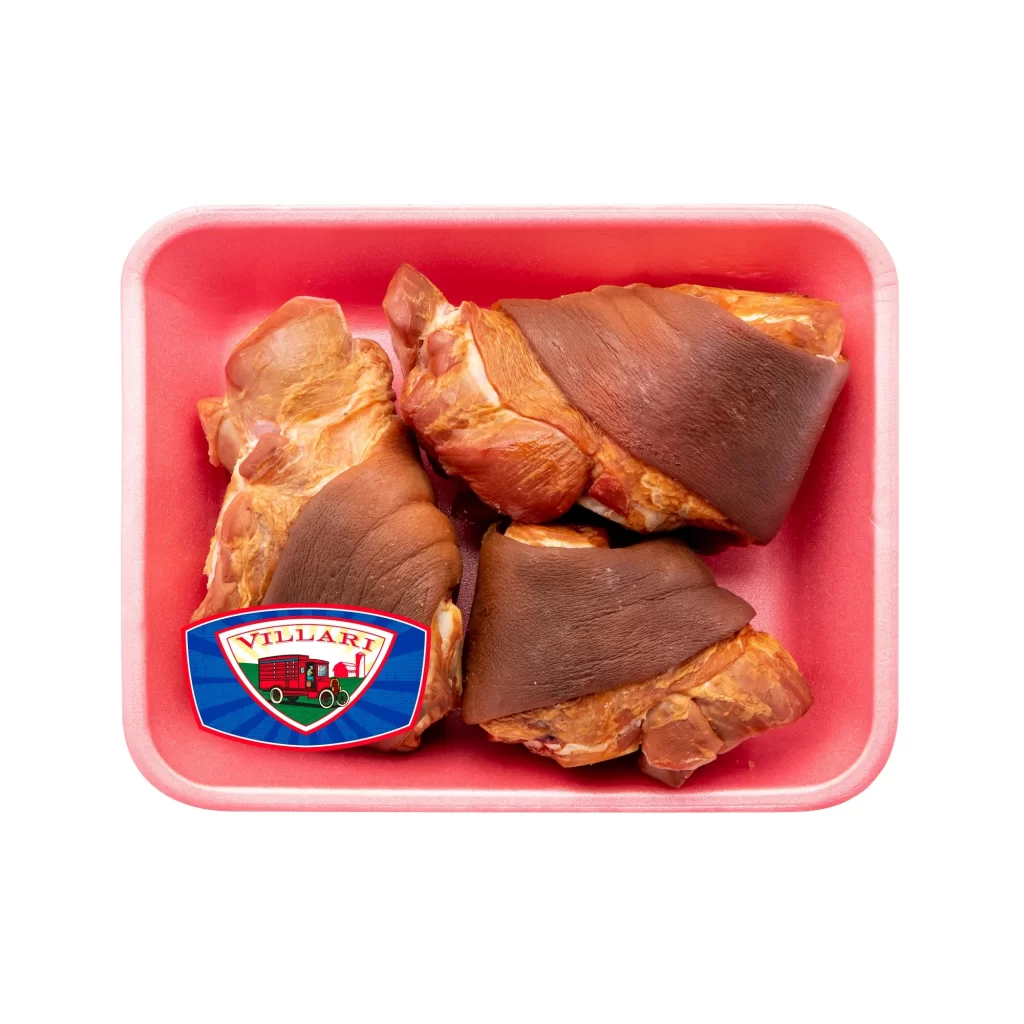
FAQ
What are some common mistakes when cooking black-eyed peas?
Avoid cooking the peas at a rapid boil, adding too much salt too early, or letting the cooking liquid evaporate. For dried peas, be sure to sort, rinse, and soak them before cooking.
Should black-eyed peas be covered while cooking?
Yes. I cover my black-eyed peas while they gently simmer to prevent too much liquid from evaporating. Check them occasionally and add a little water if needed.
Can I make black-eyed peas without ham hocks?
Absolutely! Smoked neck bones or smoked turkey are great substitutes that will still give the peas a rich, smoky flavor.
How do I know when black-eyed peas are done?
They're ready when the peas are tender and creamy but still hold their shape. The cooking liquid should also be slightly thickened and gravy-like.
Black Eyed Peas Recipe
Ingredients
- 16 oz Black Eyed Peas, fresh or soaked for 8 hours
- 2 Ham Hocks, you may substitute with smoked neck bones or another smoked meat
- 1/2 teaspoon Onion Powder
- 1/2 teaspoon Garlic Powder
- 1/3 cup Onion, finely chopped
- 3 dashes Liquid Hickory Smoke
- 2 tablespoon Butter
- Water
- Salt & Pepper to Taste
- 3 stalks Green Onion (Optional Garnish), diced

Instructions
- To a pot, add 2 ham hocks. Fill the pot with enough water to just barely cover the top of the ham hocks. Place on the oven over medium heat. Add 1/2 tsp garlic powder, 1/2 tsp onion powder. Allow ingredients to simmer to form a smoky broth for about 30 minutes. Do not allow broth to boil.
- As broth comes up to simmer, take a separate small sauté pan, melt 2 tbsp of butter over medium heat, and sauté 1/3 cup of finely diced onion until soft. Turn off heat and set sautéd onions aside.
- After 30 minutes of broth simmering, add 16 oz of fresh black-eyed peas or dried black eyed peas that have soaked overnight. Do not add dried black-eyed peas straight from the bag that have not been cleaned and soaked. Pour cleaned black eyed peas into broth, add onion butter mixture, 3 dashes of liquid hickory smoke and allow black eyed peas to slowly cook over low medium heat for 2 – 3 hours. Cover pot with lid.
- I recommend stirring, adding salt halfway and towards the end of the cooking process to ensure you do not over-salt the black-eyed peas. The sodium within the smoked meat will already add a salt-like flavor. Allowing peas to simmer low and slow will also allow them to thicken on their own to form a gravy like texture. Season with salt and pepper to taste before serving. Garnish with chopped green onions and enjoy!
Notes
- Dried peas: Sort, rinse, and soak dried black-eyed peas for about 8 hours or overnight before cooking. Drain and rinse again before adding them to the pot.
- Fresh peas: Fresh black-eyed peas do not need to be soaked; simply sort and rinse them before cooking.
- Smoked meat: Smoked neck bones or smoked turkey can be substituted for the ham hocks.
- Salt carefully: Wait until the peas have cooked for a while before adding salt. Smoked meat can add quite a bit of salt to the broth.
- Keep it low and slow: Maintain a gentle simmer rather than a rapid boil for tender, creamy peas.
- Adjust the liquid: If the broth gets too low before the peas are tender, add a little more water as needed.
- For a thicker broth: Allow the peas to continue simmering until some begin to soften and naturally thicken the cooking liquid. No additional thickener is needed.
Nutrition
Nutrition information is automatically calculated, so should only be used as an approximation.




This looks so good and perfect for this time of year when it’s so cold. I love that it is easy to make and hearty! I am salivating thinking about it.
Maureen | http://www.littlemisscasual.com
This Southern-style black-eyed peas recipe seems like a great choice. It’s simple, yet comforting, and fits the holiday vibe well.
The perfect soul food, a warming meal for a cold day after the holidays. I usually struggle with legumes, but I think from your post, the problem was not soaking long enough. And the rinsing thoroughly! I only soaked for a few hours. I will try the overnight and hope to enjoy this delish meal without tummy noises and such…
This is totally new recipe for me, haven’t cooked many recipes with black-eyed peas. I’m saving this to make it for our family gathering and surprise them with this recipe, thank you for sharing.
The weather is cold and this recipe is a perfect dish to make for our family dinner. I am saving this right now, thank you!