
Updated: September 8, 2026
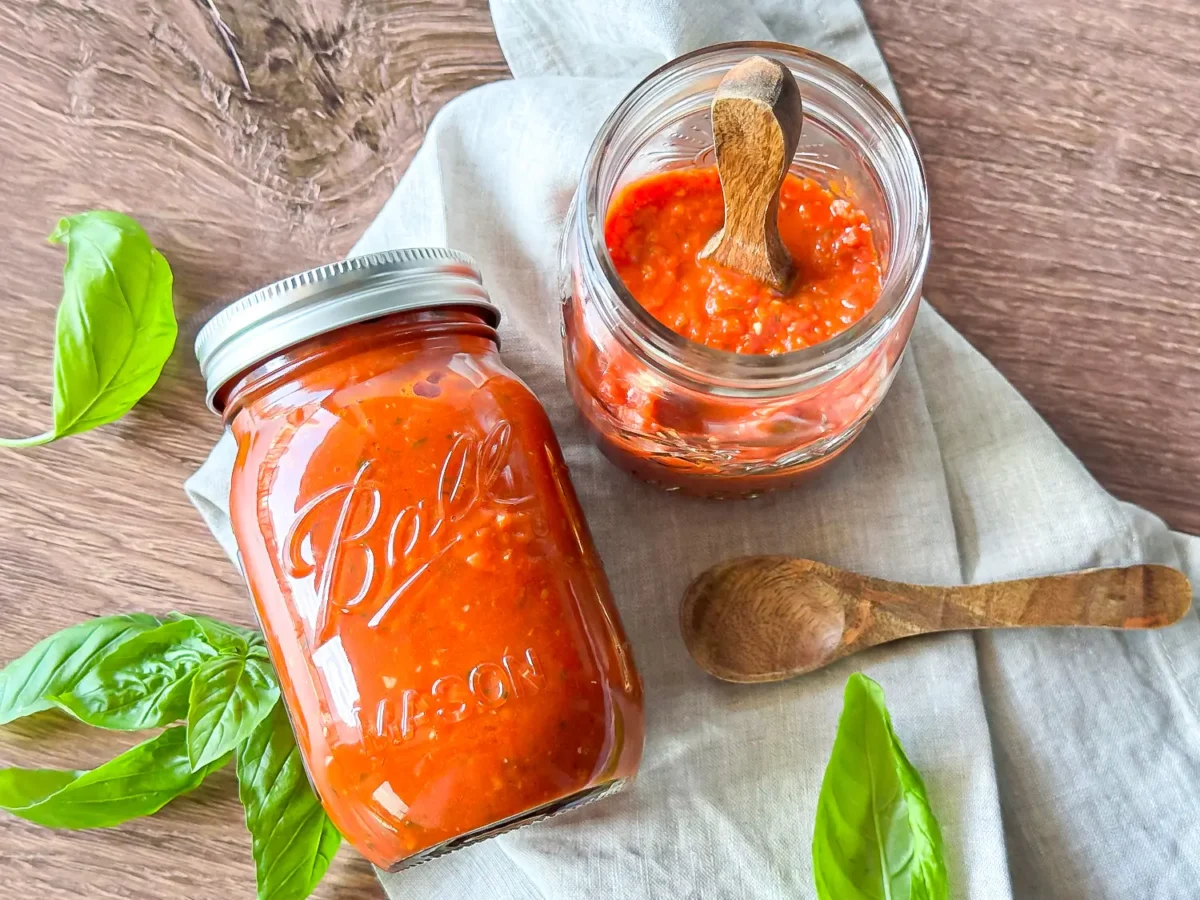
There’s nothing quite like making your own marinara sauce from scratch! I love using this homemade marinara sauce recipe for everything from spaghetti, on classic pepperoni pizza to my zucchini pizza bites and more. This sauce is made with whole San Marzano tomatoes, fresh garlic, basil, parsley, and a simple aromatic base. It has a fresh, rich flavor that’s hard to get from a store-bought jar. Once you learn how simple homemade marinara sauce is, you’ll want to make your own again and again!
Want to Email This for Later?
Table of Contents
- Why You’ll Love This Marinara Sauce Recipe
- Marinara Sauce Ingredients
- Why San Marzano Tomatoes?
- How to Make Homemade Marinara Sauce
- Substitutions & Variations
- Marinara Sauce Tips
- Common Marinara Sauce Mistakes to Avoid
- Storage & Make-Ahead Tips
- What to Serve with Marinara Sauce
- Marinara Sauce vs. Pasta Sauce: What’s the Difference?
- FAQ
- Recipe Card
- Homemade Marinara Sauce Recipe
- Craving More?
Why You’ll Love This Marinara Sauce Recipe
- Rich, homemade flavor – My technique of sautéing the onion and celery before blooming the fresh garlic and red pepper flakes creates layers of flavor you just don’t get from store-bought marinara sauce.
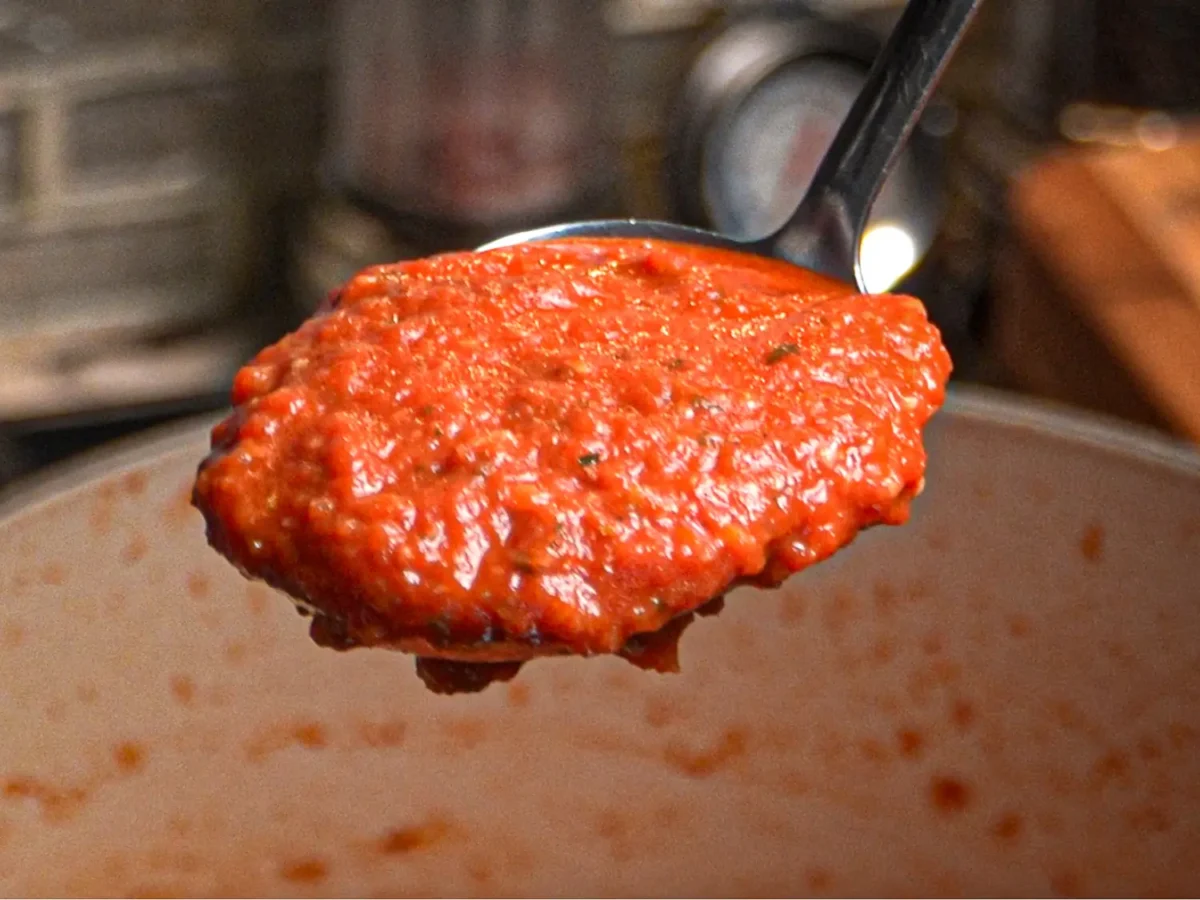
- Made with San Marzano tomatoes – Whole peeled San Marzano tomatoes have a naturally rich tomato flavor and break down beautifully as the sauce simmers.
- Make it smooth or chunky – This sauce is flexible. You can leave the sauce with a rustic, chunky texture or use an immersion blender to make it as smooth as you like.
- Ready in under an hour – Since the flavors are so robust in this recipe, you don’t have to simmer this sauce all afternoon to develop great flavor, making it an easy option for busy weeknights.
- Perfect for making ahead – Make a double batch and keep some in the refrigerator or freezer for an easy homemade sauce you can use later.
Marinara Sauce Ingredients
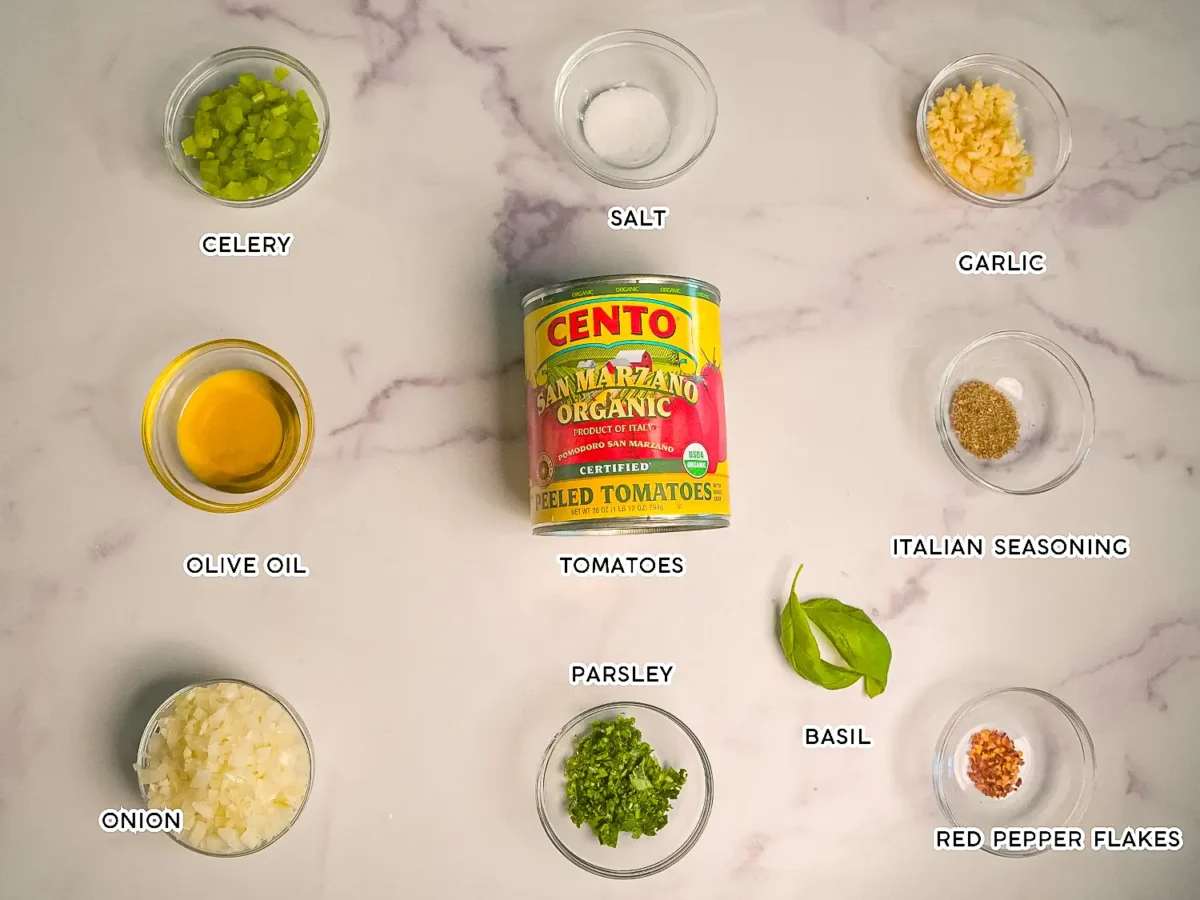
One of my favorite things about this homemade marinara sauce recipe is how much flavor you can create with just a handful of simple ingredients. Detailed measurements are in the recipe card below.
- Extra-virgin olive oil – Used to sauté the vegetables and bloom the garlic and red pepper flakes, creating a flavorful base for the sauce.
- Yellow onion – Adds a subtle sweetness and savory depth as it softens in the olive oil.
- Celery – Gives the sauce another layer of savory flavor and works with the onion to create a simple soffritto-style aromatic base.
- Fresh garlic – Six garlic cloves give this marinara plenty of fresh, garlicky flavor without overpowering the tomatoes.
- Salt – Enhances the natural flavors of the tomatoes, aromatics, and herbs.
- Whole peeled San Marzano tomatoes – The star of the sauce! Starting with whole tomatoes allows you to crush them yourself, giving you more control over the final texture.
- Dried Italian herbs – Adds a subtle blend of classic Italian-inspired herbs that complements the tomatoes without competing with the fresh basil and parsley.
- Red pepper flakes – Adds just a touch of warmth to the background of the sauce. You can always add more if you prefer a spicy marinara sauce.
- Fresh Italian flat-leaf parsley – Adds freshness and a mild herbaceous flavor that brightens the rich tomato base.
- Fresh basil – Adds its distinctive sweet, aromatic flavor as the marinara simmers and is one of my favorite ways to give homemade tomato sauce a fresh finish.
Why San Marzano Tomatoes?
I prefer whole San Marzano tomatoes for marinara sauce because of their rich tomato flavor, meaty texture, and natural sweetness. Using them whole also lets you control the texture. You can hand-crush them for a rustic, chunky sauce or blend the finished marinara for a smoother consistency.
Tip: For authentic San Marzano tomatoes from Italy, look for the DOP seal on the can. San Marzano-style tomatoes will also work well if that’s what you can find.
How to Make Homemade Marinara Sauce
Making your own marinara sauce is easier than you might think! Follow the step-by-step photos below to see the process. You’ll find the complete ingredient measurements and detailed instructions in the recipe card at the bottom of this post.
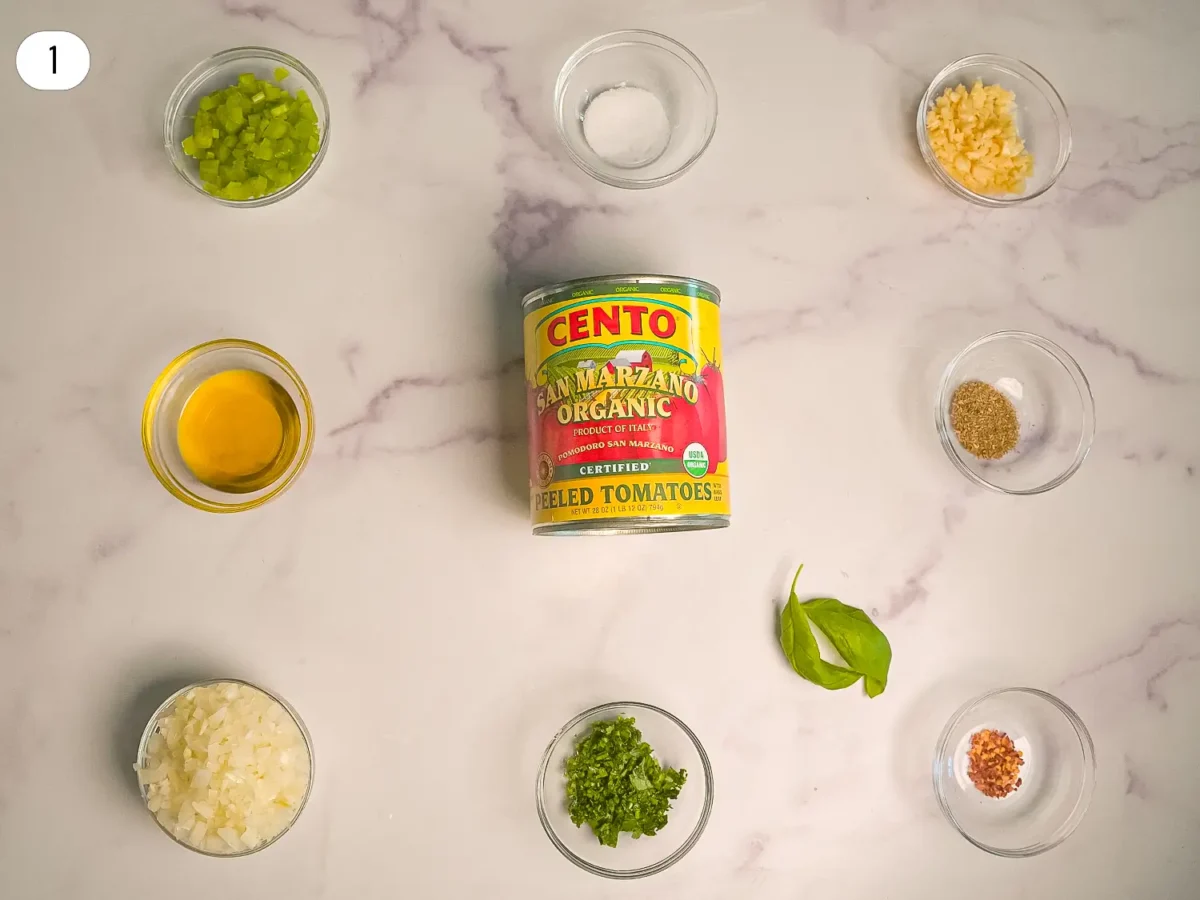
STEP 1: Prep the ingredients – Finely dice the onion and celery, mince the garlic, and chop the parsley. Gently crush the whole San Marzano tomatoes by hand or with a potato masher, leaving some texture.
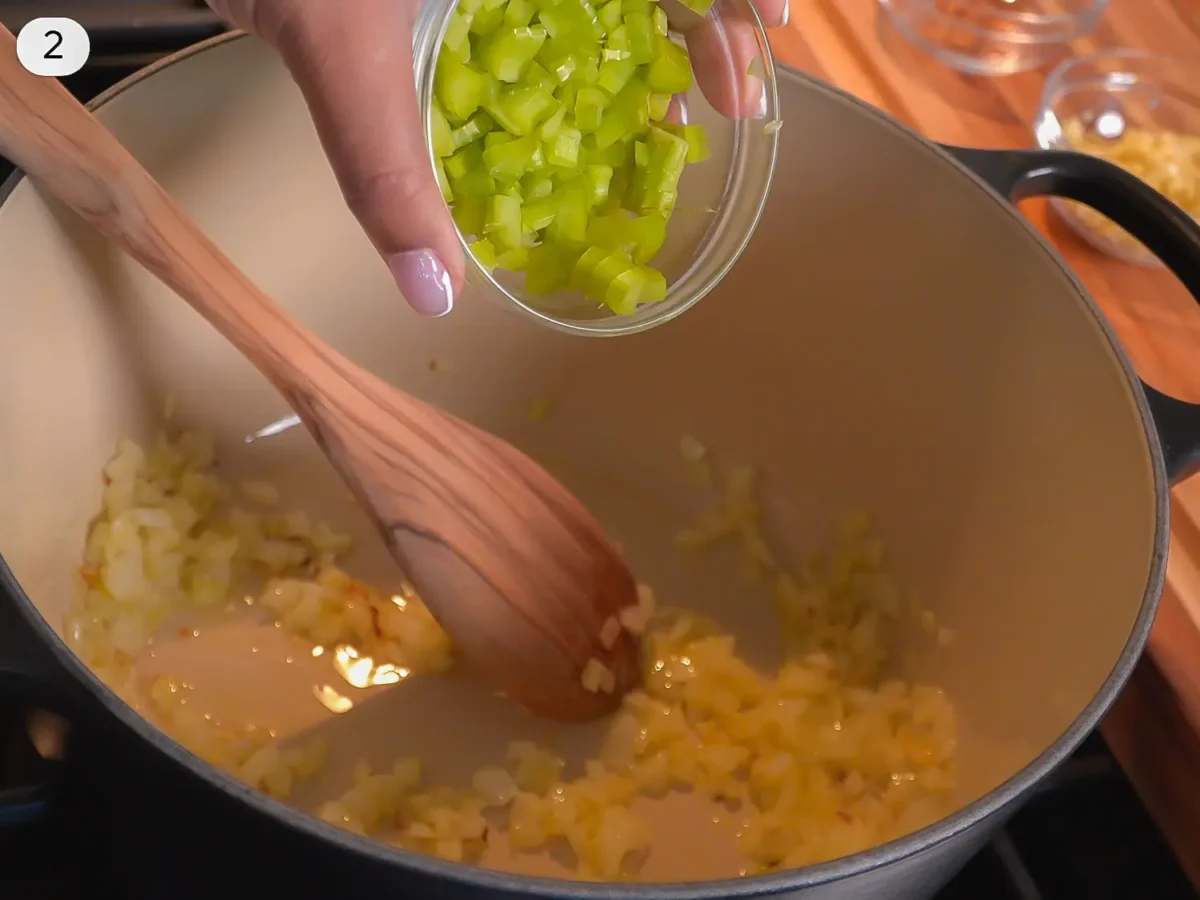
STEP 2: Sauté the vegetables – Heat the olive oil in a large saucepan or Dutch oven over medium heat. Add the onion and celery and sauté until softened and translucent, about 5-7 minutes.
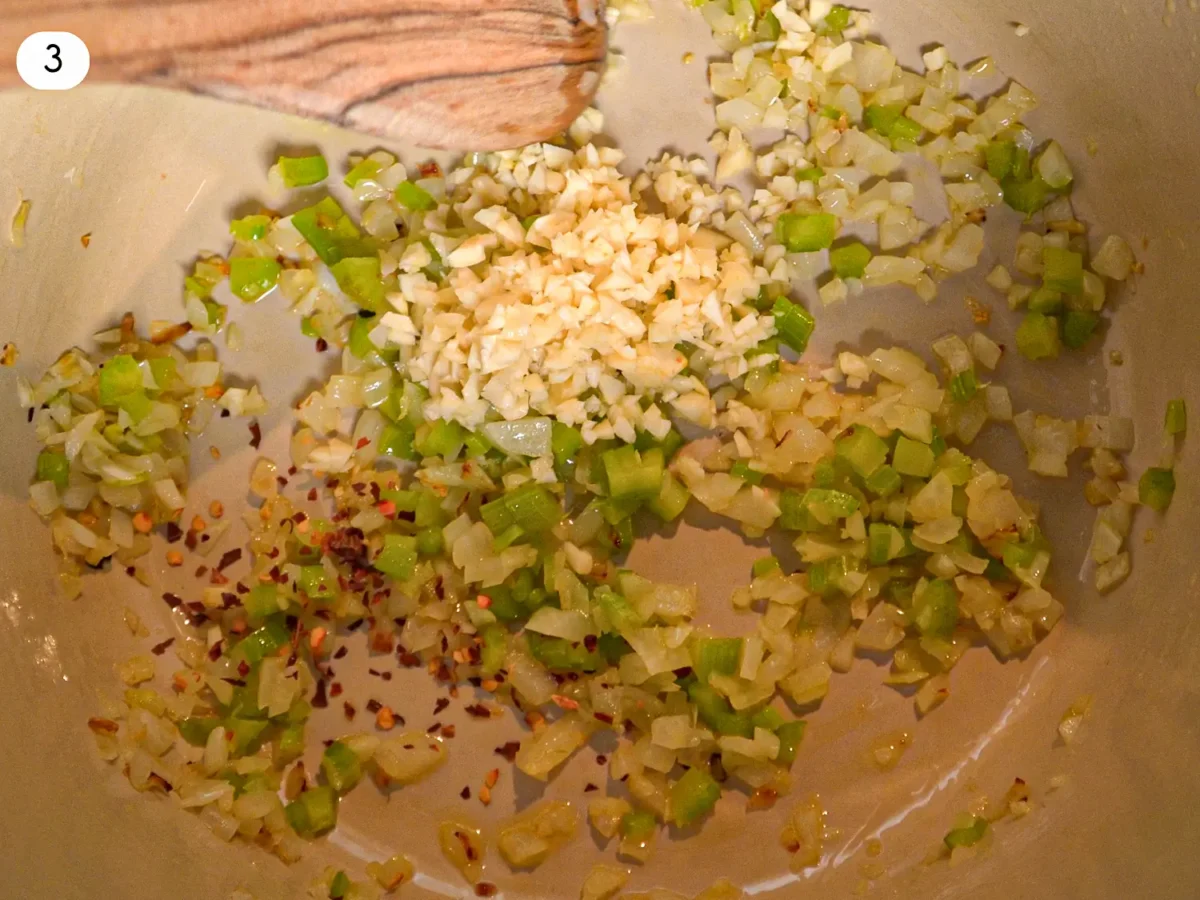
STEP 3: Bloom the garlic and red pepper flakes – Stir in the fresh garlic and red pepper flakes and cook for 30-60 seconds, stirring constantly, until fragrant. Be careful not to let the garlic brown.
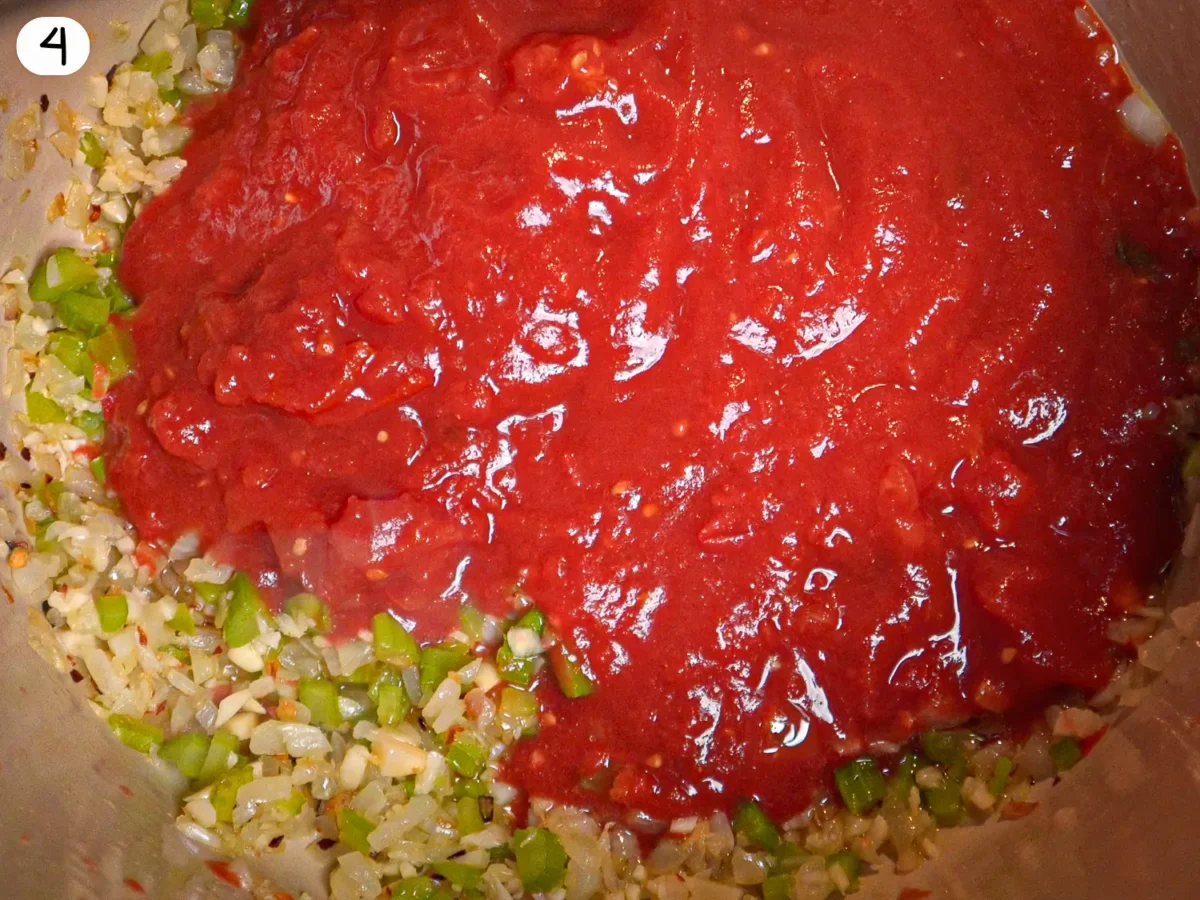
STEP 4: Add the tomatoes and seasonings – Pour in the crushed San Marzano tomatoes and their juices. Add the salt and Italian seasoning, stirring everything together until combined.
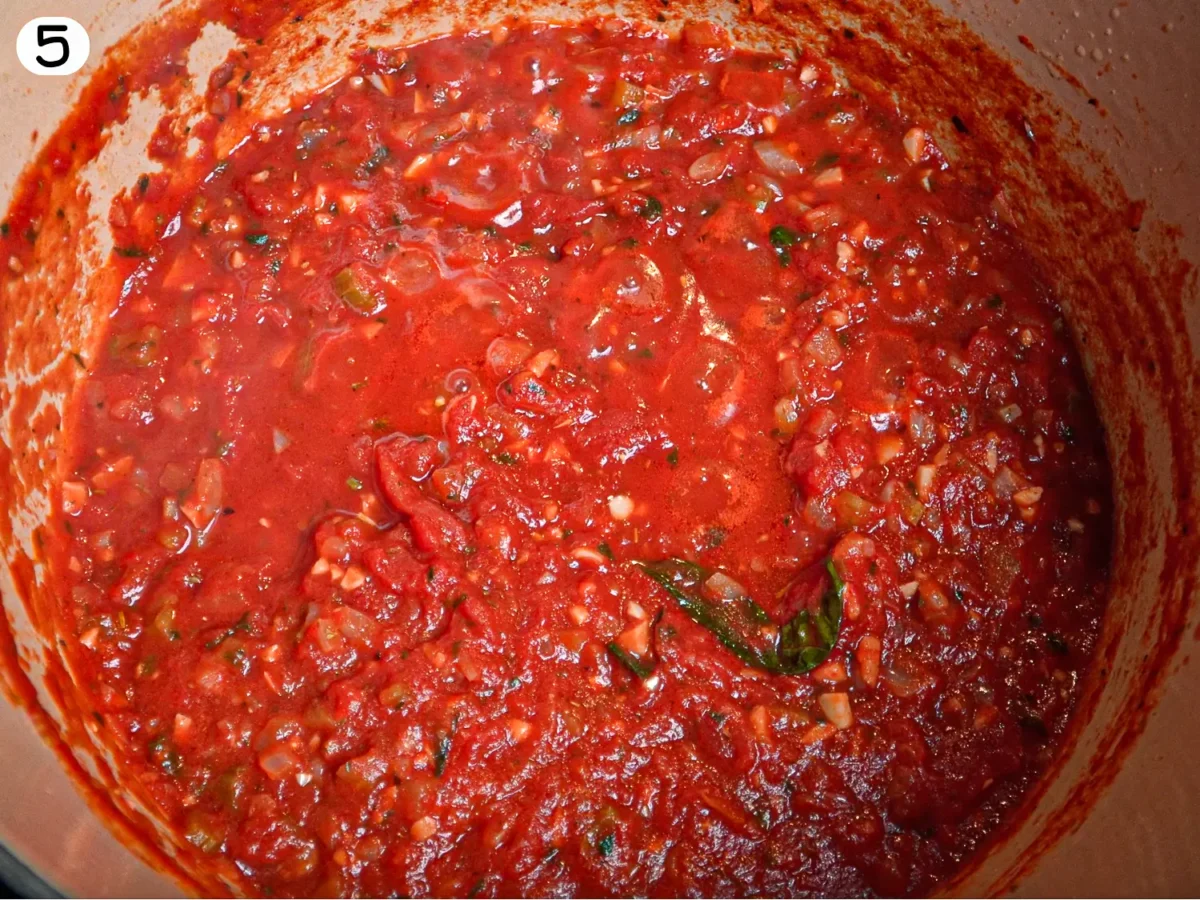
STEP 5: Simmer the marinara sauce. Add the fresh parsley and basil sprigs. Reduce the heat to low and let the sauce gently simmer uncovered for 25-35 minutes, stirring occasionally, until it has thickened and the flavors have come together.
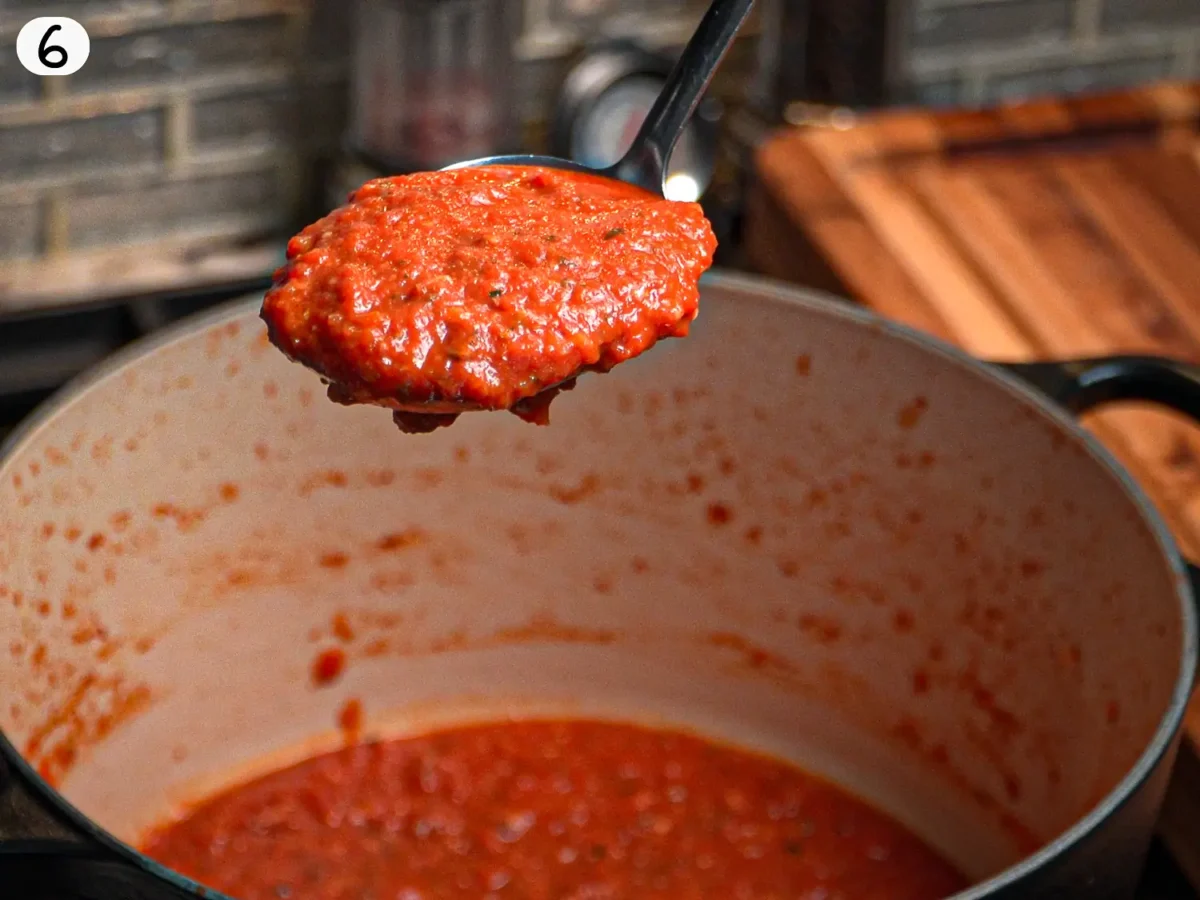
STEP 6: Finish and serve – Taste and adjust the seasoning as needed. Leave your marinara chunky for a rustic texture, or carefully blend it with an immersion blender for a smoother sauce. Remove the basil sprigs before serving. Bottle and enjoy!
Substitutions & Variations
This marinara recipe is easy to customize based on what you have on hand or the flavor and texture you prefer.
- Use regular whole peeled tomatoes – If you can’t find San Marzano tomatoes, a good-quality can of whole peeled tomatoes works well too.
- Try crushed tomatoes –You can substitute crushed tomatoes for a smoother sauce and skip crushing the whole tomatoes yourself.
- Make it spicy – Increase the red pepper flakes for a spicy marinara sauce with a little more heat.
- Add tomato paste – For a deeper tomato flavor and thicker consistency, stir 1-2 tablespoons of tomato paste into the sautéed vegetables and cook for about a minute before adding the garlic.
- Add a little sweetness – If your canned tomatoes taste particularly acidic, add a small pinch of sugar to balance the sauce. Taste first since you may find that it doesn’t need any.
- Leave out the celery – While I love the subtle savory flavor celery adds, you can omit it without making any other changes to the recipe.
- Adjust the texture – Keep the sauce chunky and rustic, or use an immersion blender to create a smoother marinara sauce.
Marinara Sauce Tips
- Choose good-quality tomatoes – With such a simple marinara sauce, the flavor of the tomatoes really comes through, so start with the best whole peeled tomatoes you can find.
- Keep it at a gentle simmer – Once the tomatoes are added, lower the heat and let the sauce simmer gently. This gives the flavors time to develop while allowing the sauce to gradually thicken.
- Simmer uncovered – Leaving the pot uncovered allows excess moisture to evaporate and helps create a richer, thicker marinara.
- Stir occasionally – Give the sauce a stir every so often, making sure to scrape along the bottom of the pot so nothing sticks.
- Adjust the consistency – If your sauce becomes thicker than you prefer, stir in a small splash of water. For a thicker sauce, simply let it simmer a little longer.
- Taste before serving –Tomatoes can vary in sweetness and acidity, so always taste your marinara at the end and adjust the salt or red pepper flakes as needed.
Common Marinara Sauce Mistakes to Avoid
Even a simple marinara sauce can taste completely different depending on how it’s prepared. Avoid these common mistakes for the best results:
- Browning the garlic –Garlic only needs about 30-60 seconds to become fragrant. If it browns or burns, it can give your entire sauce a bitter flavor.
- Rushing the onion and celery – Give the vegetables time to soften over medium heat before adding the garlic. This creates a more flavorful base for the sauce.
- Boiling instead of simmering – Keep the marinara at a gentle simmer once you add the tomatoes. Cooking it too aggressively can cause the sauce to reduce too quickly.
- Using reactive cookware –Tomatoes are acidic, so I recommend a stainless steel saucepan or enameled Dutch oven rather than reactive cookware such as uncoated aluminum or cast iron.
- Skipping the final taste test – Before serving, taste your sauce and adjust the salt, herbs, or red pepper flakes as needed.
Storage & Make-Ahead Tips
Homemade marinara sauce is perfect for making ahead, and I often recommend making a double batch so you can save some for later.
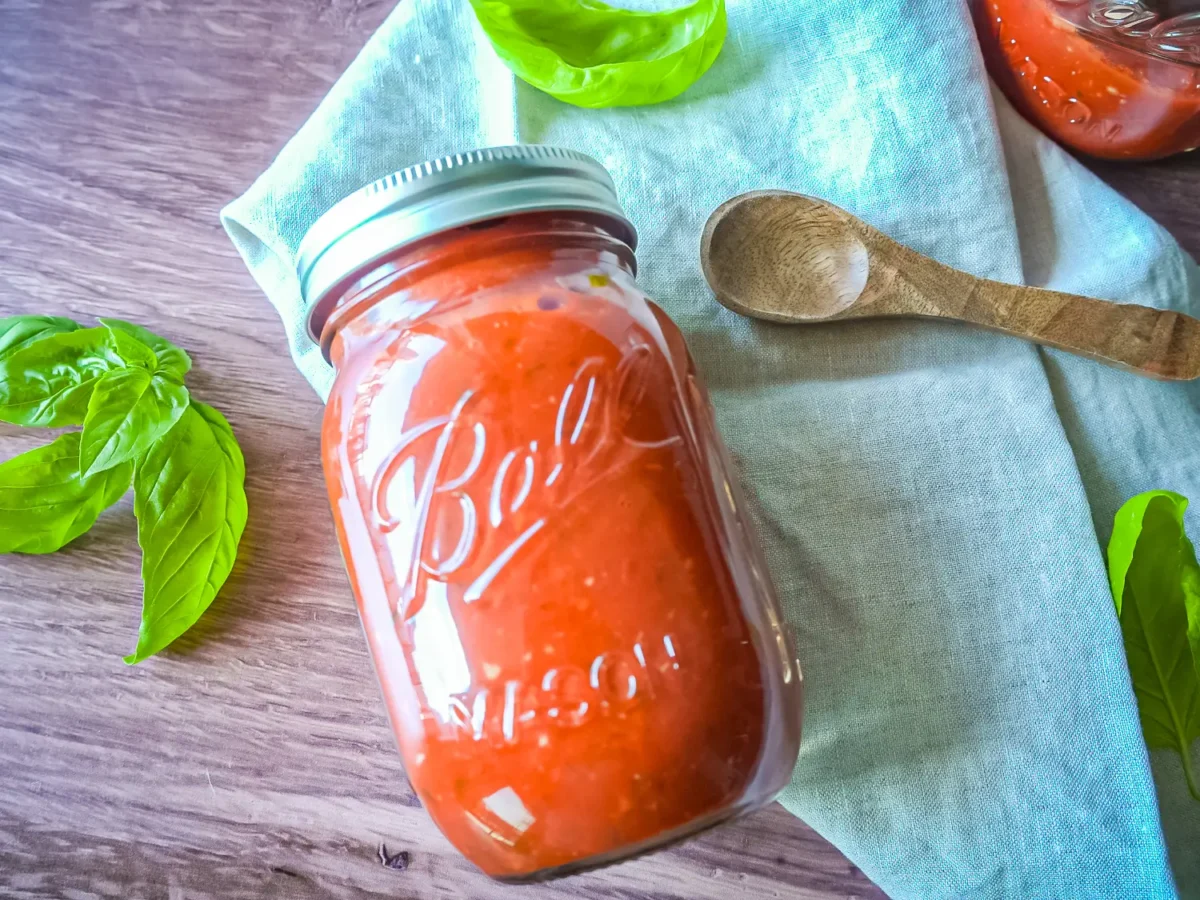
- Refrigerator – Allow the marinara sauce to cool completely, then transfer it to an airtight container or glass jar. Store in the refrigerator for up to 5 days.
- Freezer – Once cooled, transfer the sauce to a freezer-safe container or freezer bag, leaving a little room for expansion. Freeze for up to 3 months.
- Thawing –Thaw frozen marinara overnight in the refrigerator before reheating.
- Reheating – Warm the sauce in a saucepan over low to medium-low heat, stirring occasionally. If it has thickened during storage, add a small splash of water until it reaches your desired consistency.
- Make ahead – Prepare the sauce a few days in advance and refrigerate it until you’re ready to use it for an easy pasta or pizza night.
What to Serve with Marinara Sauce
One of the reasons I always come back to this homemade marinara sauce is its versatility. Keep a batch on hand and you’ll have an easy starting point for so many meals and appetizers:
- Zucchini Pizza Bites
- Classic Pepperoni Pizza
- Spaghetti
- Pretzel Buns (perfect for dipping!)
- Vegetable Lasagna
- Homemade Meatballs
Marinara Sauce vs. Pasta Sauce: What’s the Difference?
Marinara is a type of pasta sauce, but not every pasta sauce is marinara. Marinara is typically a simple tomato-based sauce made with tomatoes, garlic, olive oil, and herbs, while the term “pasta sauce” can refer to everything from tomato-based spaghetti sauce to meat sauce, Alfredo, pesto, and more.
| Marinara Sauce | Other Tomato-Based Pasta Sauces | |
|---|---|---|
| Ingredients | Tomatoes, olive oil, garlic, aromatics, herbs | May include meat, vegetables, wine, cream, or additional seasonings |
| Cooking Time | Usually relatively quick | Can simmer for an hour or longer |
| Texture | Smooth or slightly chunky | Varies depending on the sauce |
| Flavor | Fresh, tomato-forward and herbaceous | Can be richer, heartier, or more complex |
| Best Uses | Pasta, pizza, dipping, Parmesan dishes | Primarily pasta and baked pasta dishes |
FAQ
Can I use crushed tomatoes instead of whole tomatoes?
Yes. You can substitute a 28-ounce can of crushed tomatoes for the whole peeled tomatoes. The finished marinara will have a smoother, more uniform texture, but the flavor will still be delicious.
Can I make marinara sauce with fresh tomatoes?
Yes, but the flavor and consistency will vary depending on the tomatoes you use. Fresh tomato marinara sauce may also need additional cooking time to reduce the extra moisture. For this recipe, I prefer canned whole San Marzano tomatoes because they provide consistent flavor and texture year-round.
Why is my marinara sauce watery?
Your sauce may simply need more time to reduce. Continue simmering it uncovered over low heat, stirring occasionally, until the excess moisture evaporates and the marinara reaches your desired consistency.
How can I make marinara sauce less acidic?
Start with good-quality tomatoes and always taste the finished sauce before making adjustments. If your marinara tastes more acidic than you prefer, a small pinch of sugar can help balance the acidity without making the sauce noticeably sweet.
Recipe Card
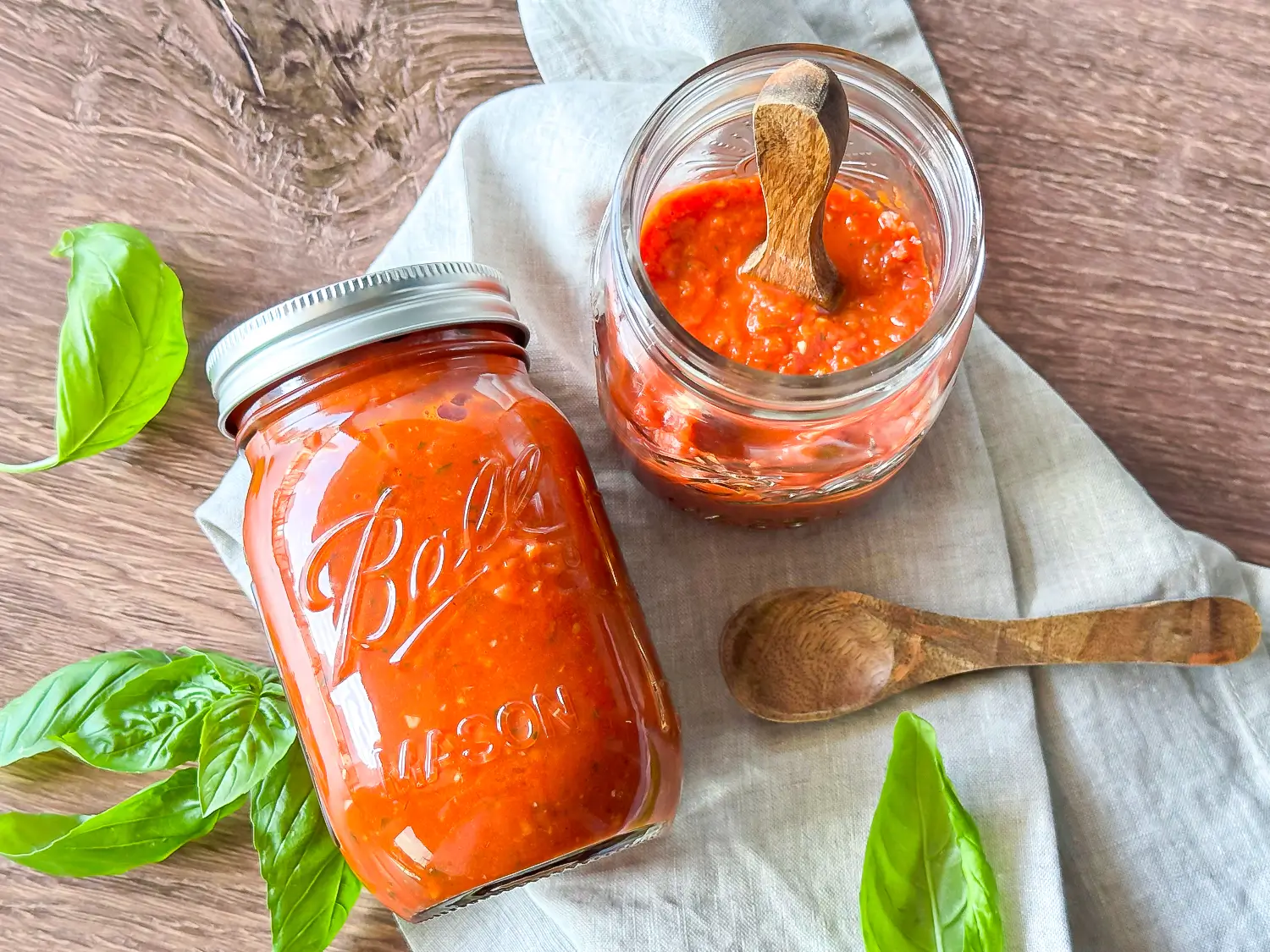
Homemade Marinara Sauce
Equipment
Ingredients
- 2 tablespoons Olive Oil
- ½ Yellow Onion, (finely diced)
- 1 rib Celery, (finely diced)
- 6 cloves Garlic, (minced)
- ½ teaspoon Salt
- 28 ounces Whole Peeled San Marzano Tomatoes, (1 can)
- ½ teaspoon Dried Italian Herbs
- ¼ teaspoon Red Pepper Flakes, (just a pinch)
- 1 tablespoon Fresh Italian Flat-Leaf Parsley, (chopped)
- 2 sprigs Basil

Instructions
- Finely dice the onion and celery, mince the garlic, and chop the parsley. Gently crush the whole San Marzano tomatoes by hand or with a potato masher, leaving some texture.
- Heat the olive oil in a large saucepan or Dutch oven over medium heat. Add the onion and celery and sauté until softened and translucent, about 5-7 minutes.
- Stir in the fresh garlic and red pepper flakes and cook for 30-60 seconds, stirring constantly, until fragrant. Be careful not to let the garlic brown.
- Pour in the crushed San Marzano tomatoes and their juices. Add the salt and Italian seasoning, stirring everything together until combined.
- Add the fresh parsley and basil sprigs. Reduce the heat to low and let the sauce gently simmer uncovered for 25-35 minutes, stirring occasionally, until it has thickened and the flavors have come together.
- Taste and adjust the seasoning as needed. Leave your marinara chunky for a rustic texture, or carefully blend it with an immersion blender for a smoother sauce. Remove the basil sprigs before serving.
Notes
- Tomatoes: For the best flavor, use good-quality whole peeled San Marzano tomatoes. Regular whole peeled tomatoes can also be used.
- Texture: Hand-crush the tomatoes for a rustic, chunky marinara, or blend the finished sauce with an immersion blender for a smoother consistency.
- Garlic: Cook the garlic for only 30-60 seconds. Avoid browning it, as burnt garlic can make the sauce taste bitter.
- Spice level: Adjust the red pepper flakes to taste or omit them for a completely mild sauce.
- Consistency: Simmer the sauce uncovered so excess moisture can evaporate. For a thicker sauce, simmer a little longer.
- Storage: Store cooled marinara in an airtight container in the refrigerator for up to 5 days.
- Freezing: Freeze in a freezer-safe container for up to 3 months. Thaw overnight in the refrigerator before reheating.
- Double batch: This recipe doubles well if you’d like to keep extra marinara in the freezer for pasta, pizza, or dipping. This recipe makes around 3 cups of marinara sauce.
Nutrition
Nutrition information is automatically calculated, so should only be used as an approximation.
Craving More?
If you make this homemade marinara sauce recipe, I’d love to see how you use it! Tag me @elicitfolio on Instagram, follow along on Pinterest for more of my favorite recipes, or leave a comment below and let me know how your marinara turned out. And while you’re there, tell me what homemade sauce you’d like to see me make next!


Very easy. I used tomatoes from my garden to make use of the surplus i had at the end of summer but just roasted them first and it came out great! Thanks
Ive made this recipe Several times and its easy to follow and absolutely divine. Make it and thank me later!